


 русский
 Français
 Español
NCJ-150 Fully Automatic High-Speed Metal Circular Saw Machine Steel Rod Blanking Machine Sawing Machine
Cat:Hinged Circular Saw Machine
Highly rigid body structure with advanced clamping device, environment...
See DetailsCutting work sits at the core of manufacturing, construction, metal fabrication, and a handful of other industrial sectors — and as production runs get more varied and less predictable, factories keep running into the same question: which cutting equipment can actually hold up to that variability without constant babysitting?
Industrial band saws have become the answer for a lot of shops. They deal with the problems that show up on almost every factory floor at some point — cuts that come out slightly different every time, lines that stop and start because of some avoidable hiccup, material that's a pain to handle mid-process, or requirements that shift halfway through a job. None of these are dramatic failures on their own, but they add up, and they're exactly what a band saw is built to eliminate.
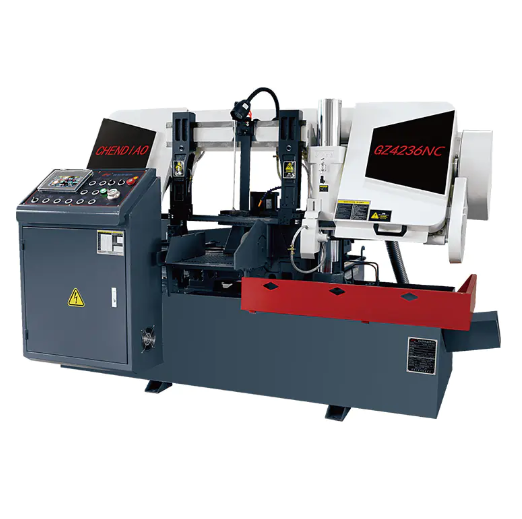
The difference between an industrial band saw and something like a handheld or small benchtop cutter isn't really about power — it's about endurance. Handheld tools are fine for occasional use, but they weren't designed to run all day, every day, without drifting out of spec. Industrial band saws were. They bring consistency to the cutting step itself and, by extension, make the rest of the production line calmer and more predictable to run.
Cutting is one of the foundational processes in manufacturing, yet it is rarely straightforward. Variations in material types, custom production standards and complex on-site working conditions often create operational hurdles for factory teams.
Most routine cutting issues stem from the following practical problems, which directly impact overall production efficiency:
| Challenge | Impact on Production |
|---|---|
| Inconsistent cutting results | May affect later processing steps |
| Manual operation difficulties | Can slow down workflow |
| Material handling issues | Creates additional labor needs |
| Changing production demands | Requires flexible equipment solutions |
| Equipment maintenance concerns | May influence daily operations |
Industrial production sites require equipment that balances stable efficiency and long-term reliability. A qualified cutting machine must not only finish basic cutting tasks but also fit seamlessly into the factory's entire production system.
When it comes to industrial cutting, consistency usually matters more than raw speed. That's especially true for mass repetitive processing, where even small variations between cuts can throw off everything downstream — a single batch of slightly-off pieces can stall an entire line waiting on rework.
Industrial band saws handle this well because the motion itself is tightly controlled by the machine's mechanical structure, not by whoever happens to be operating it that shift. The built-in guiding system does a lot of the heavy lifting here — it takes the guesswork out of the cut, which is exactly where most dimensional errors and flawed workpieces tend to creep in when things are done by hand.
That steady, repeatable motion pays off in a few concrete ways on the factory floor:
The knock-on effect matters more than the cutting step itself, honestly. Once cuts come out consistent, everything after — assembly, inspection, final processing — has a much more reliable foundation to build on. And that's usually where the real savings show up: fewer parts get flagged for rework, and fewer headaches make it further down the line.
Factory production usually involves a wide range of raw materials, and different materials come with unique hardness, thickness and cutting requirements. Traditional single-function cutting tools often struggle to adapt to diverse production needs.
Industrial band saws feature strong operational flexibility, allowing factories to handle various cutting tasks with one device instead of investing in multiple specialized machines. This versatility greatly saves equipment costs and workshop space.
These saws are widely applicable for core industrial scenarios:
Such strong adaptability makes band saws highly suitable for factories with frequent production task changes, reserving more flexible adjustment space for future production upgrades.
Traditional manual cutting relies heavily on worker experience and continuous manual operation. Workers need to control cutting tracks, adjust angles and fix materials throughout the process, which is physically demanding and inefficient.
Industrial band saws automate most repetitive mechanical work through standardized mechanical operation. They streamline cutting procedures, reduce manual intervention, and free workers from tedious repetitive tasks to focus on core production supervision and quality control work.
The practical advantages of reducing manual work are obvious:
Industrial machinery is not designed to replace professional worker experience. Instead, it leverages mechanical stability to reduce operational errors and repetitive work, making factory production more labor-efficient.
As industrial manufacturing moves toward intelligence and standardization, traditional purely manual cutting modes can no longer meet the demand for high-efficiency, high-precision mass production. Automated cutting workflows have become an inevitable industry trend.
Modern industrial band saws are equipped with mature automated control systems, which simplify operation logic, lower manual technical thresholds, and make the entire cutting process more standardized and controllable.
Automation upgrades bring tangible improvements to factory operations:
Against the backdrop of industrial upgrading, automated functions have become a key indicator for factories to evaluate and select new cutting equipment.
Work safety is always the top priority for industrial production management. Traditional cutting processes involve high-speed moving parts and heavy material handling, which carry certain operational risks and require strict on-site management.
Industrial band saws adopt integrated, standardized structural design, which isolates risky operational links and standardizes worker operation behaviors. The whole cutting process is more controllable, effectively reducing on-site safety hazards.
Core safety advantages of band saw equipment include:
A safer working environment not only protects the personal safety of on-site employees but also ensures stable and uninterrupted progress of production tasks.
Excellent industrial equipment design always starts from actual on-site usage scenarios. In addition to basic cutting performance, factories pay more attention to equipment stability, ease of use and later maintenance convenience.
Practical industrial band saws balance performance and usability through humanized structural design, solving many common pain points in daily cutting work:
| Design Consideration | Production Value |
|---|---|
| Stable structure | Supports reliable operation |
| Simple controls | Helps operators manage tasks |
| Flexible adjustment | Supports different applications |
| Easy maintenance access | Makes daily management easier |
Good equipment design is not limited to theoretical performance parameters. It fully fits actual factory working habits, truly solving practical problems in production.
Production efficiency is not simply about cutting speed. It covers overall workflow smoothness, operational stability and low downtime rate. Industrial band saws optimize production efficiency in an all-round way through standardized and streamlined processing modes.
They help factories improve overall operational efficiency from multiple dimensions:
Stable and orderly cutting links effectively reduce production delays and rework losses, helping factories achieve refined production management.
Selecting the right band saw equipment is critical to stable production. Different factories have different processing materials, output scales and workflow layouts, so equipment selection must be based on actual operational needs rather than blind parameter matching.
Enterprises mainly focus on four core factors when purchasing:
Application requirements
Confirm the equipment's applicable material types, cutting thickness and precision standards to match the factory's processing tasks.
Production workflow
Ensure the equipment's size, working mode and output capacity can be perfectly integrated into the existing production line without process conflicts.
Operation convenience
Prioritize easy-to-operate equipment to reduce worker training costs and improve daily work efficiency.
Maintenance planning
Consider later maintenance costs and convenience to ensure long-term stable equipment operation.
Targeted equipment selection avoids unnecessary debugging and adaptation work after installation, maximizing equipment utilization value.
Modern manufacturing is constantly evolving toward personalization, flexibility and high efficiency. Factories need cutting equipment that can adapt to iterative production changes while maintaining stable basic performance.
Industrial band saws provide reliable, flexible cutting solutions for modern manufacturing, helping enterprises adapt to industrial upgrading:
As an essential processing device, band saw machines continue to provide stable basic support for the iterative upgrading of the modern manufacturing industry.
While industrial band saws greatly optimize industrial cutting work, enterprises still need to handle some practical problems in actual application to maximize equipment value.
The key points that need ongoing attention in daily use include:
The performance of cutting equipment depends not only on the machine itself but also on scientific and standardized usage and management. Reasonable application strategies help enterprises obtain longer-term returns on equipment investment.
Industrial cutting technology is constantly iterating toward higher efficiency, greater intelligence and stronger flexibility. More and more enterprises value equipment's adaptive capacity and intelligent management functions.
The future development of band saw equipment will focus on four core directions:
Industrial band saws represent the evolving trend of modern cutting technology. They solve traditional cutting pain points while continuously adapting to new industrial production standards.
Cutting equipment is far more than a tool for simple material cutting. It connects raw materials, mechanical equipment and production goals. Through continuous design optimization and performance upgrading, industrial band saws keep empowering more efficient, standardized and intelligent modern manufacturing workflows.
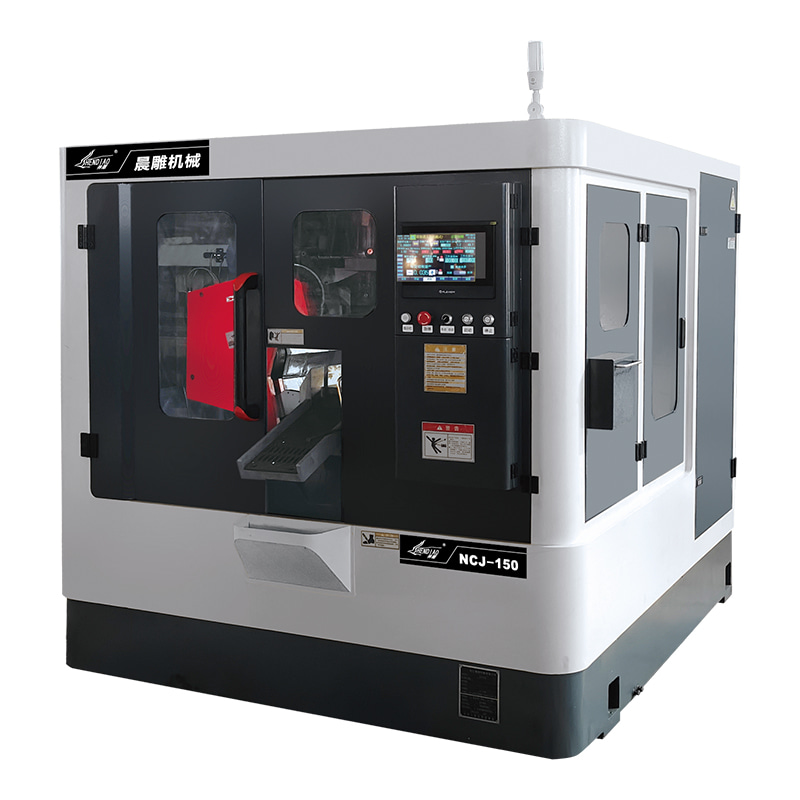
Highly rigid body structure with advanced clamping device, environment...
See Details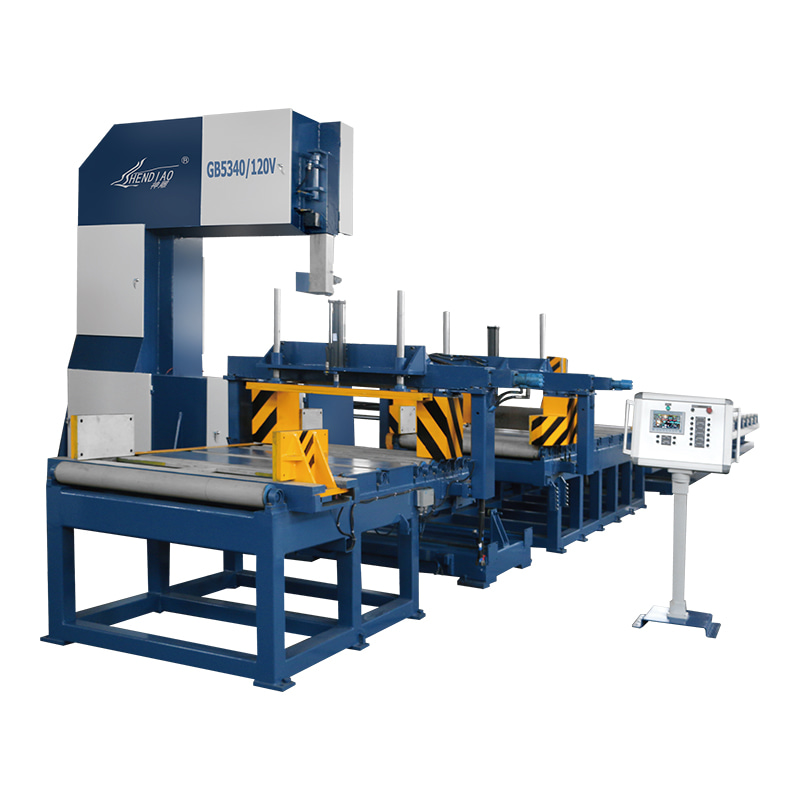
The GB5340/120V Chain Feeding High-Speed Plate Cutting Vertical Band M...
See Details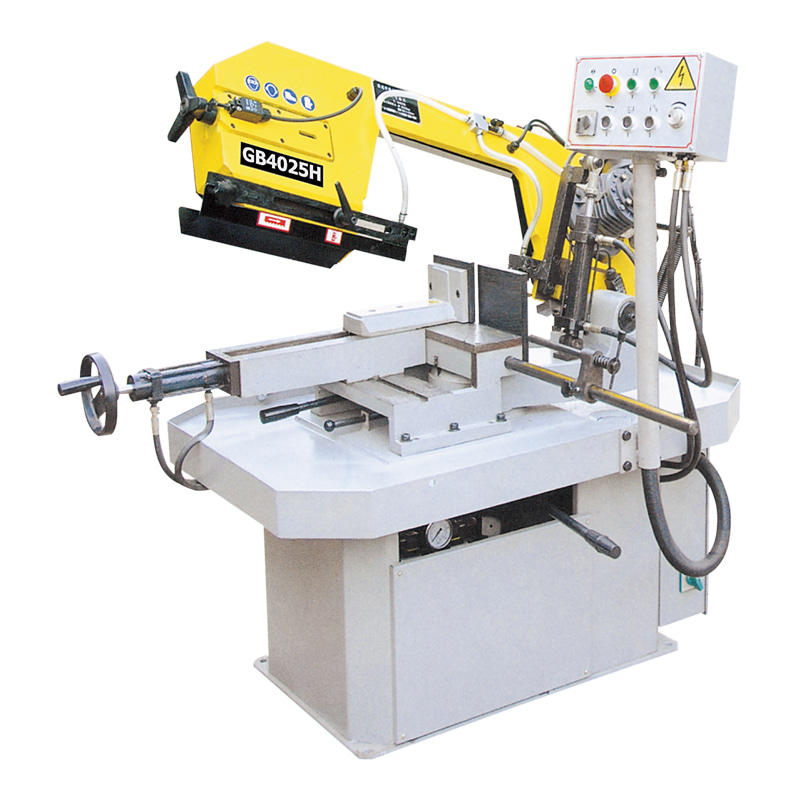
The GB4025H is a great choice,if you need a reliable saw for tackling ...
See Details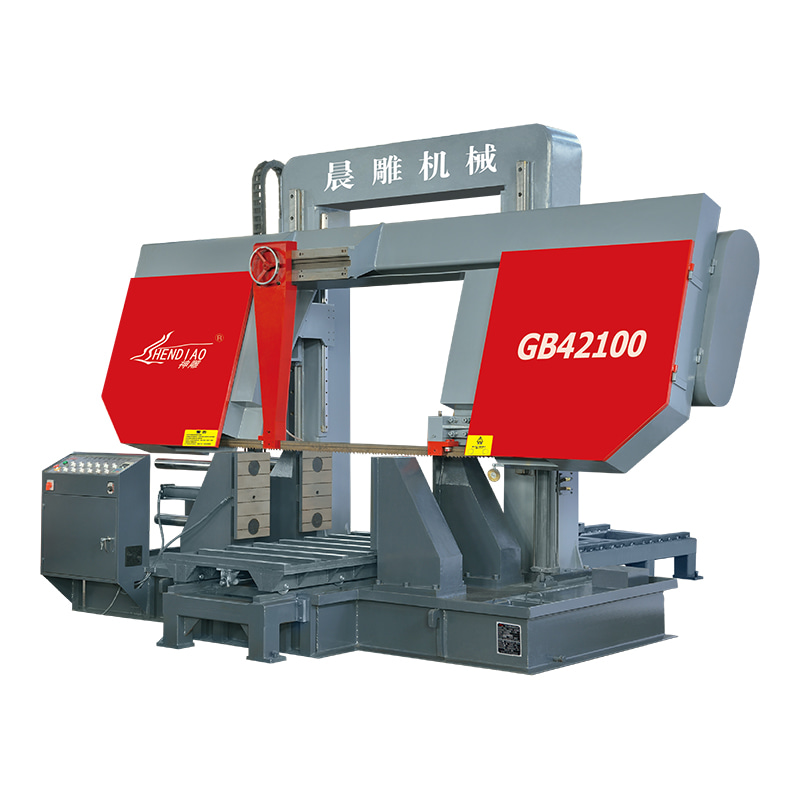
The GB42100 Slide Type Double Guide Gantry Type Band Metal Sawing Mach...
See Details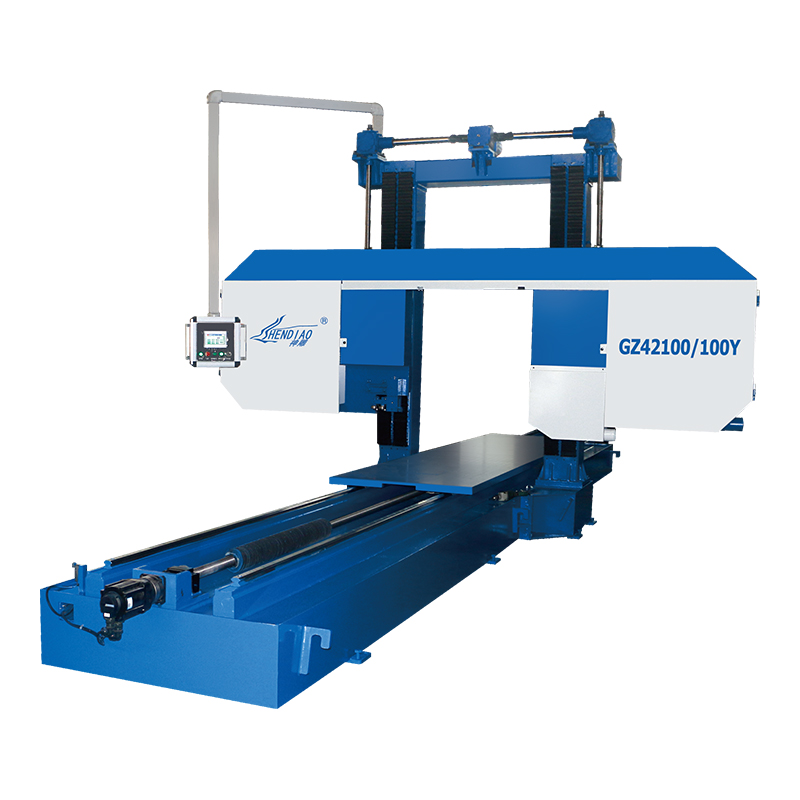
This machine tool is a special machine tool with mechanical and electr...
See Details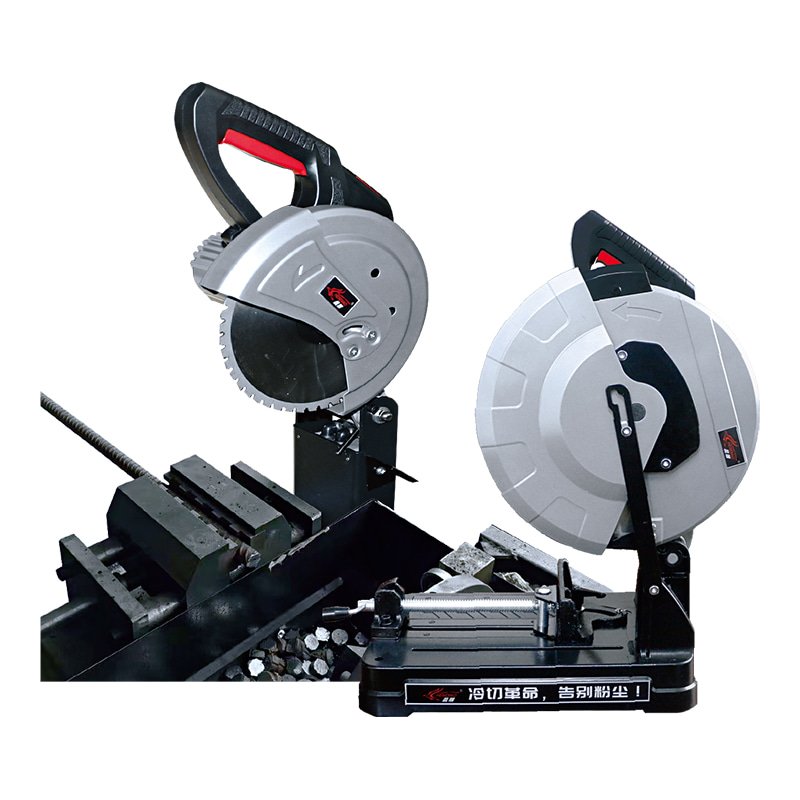
The 25/35 Permanent Magnet Brushless Cold Cutting Saw Machine is highl...
See DetailsCopyright © Zhejiang Chendiao Machinery Co., Ltd. Rights Reserved.
Band Saw Factory

